Teaching is something I never thought I would be doing in my life, but I am so happy I have had the opportunity to work with so many students to broaden their knowledge and experiences. The reason I never thought of teaching influences the decisions I make in the classroom today. I received a diagnosis of ADHD while finishing my PhD, but I have lived with ADHD my entire life. I struggled to connect with topics and assignments, either because I felt no connection to them or because I compared myself to how others acted in class and felt I did the readings wrong because I could not locate a specific passage from memory. Over time, I have found my own ways to bolster my working memory, which is affected due to being ADHD. But I also recognized ways I can make the courses I teach more accessible to everyone, because making something more accessible for everyone rarely makes it less accessible for anyone.
One way is through creating a supportive environment for discussing the material during class. I physically change the seating in the classroom into a semicircle whenever possible so students can all see each other. By seeing not only me but each other, the students are more likely to respond to each other, instead of simply engaging with me. This has led to conversations and discussions where the students lead the conversation, revealing topics and areas they need more information or clarification I could not have guessed were there. In larger classrooms, I have students’ desks in small groups, encouraging discussion in groups which then are shared with the class, revealing these same areas that need more information or clarification.
Creating these environments also reduces the pressure on students to participate, often leading to everyone engaging in the class discussion at least once during class. I also actively work to reduce the pressure to speak up during class by not calling on students unless they have their hand raised or are contributing to the discussion. My syllabi always state that simply sitting and clearly listening to the discussion is also participating in the discussion. Too many times, I would be sitting in class, engaged in the discussion by listening, only to have my mind go blank as the instructor call on me out of nowhere. I strive to never recreate that experience for any of my students.
Another way I work to make my courses accessible is not to expect memorization of the information in their readings and homework. Facts like names and dates are important to learn, but in my personal experience, feeling the pressure to remember them for a test makes it harder to remember the information. I encourage them to bring the readings for class, often via their laptops, so they can refer to them if needed. I also allow them to use the readings and any notes they may have taken when taking exams. I take advantage of the fact that we live in a time where technology allows exams to be taken online and in their own time, hopefully reducing or eliminating test anxiety, along with having those written resources at hand. These approaches have led to better grades and understanding of the course topics because the students can focus more on learning about the information and apply it rather than trying to remember facts which are only one part of the course.
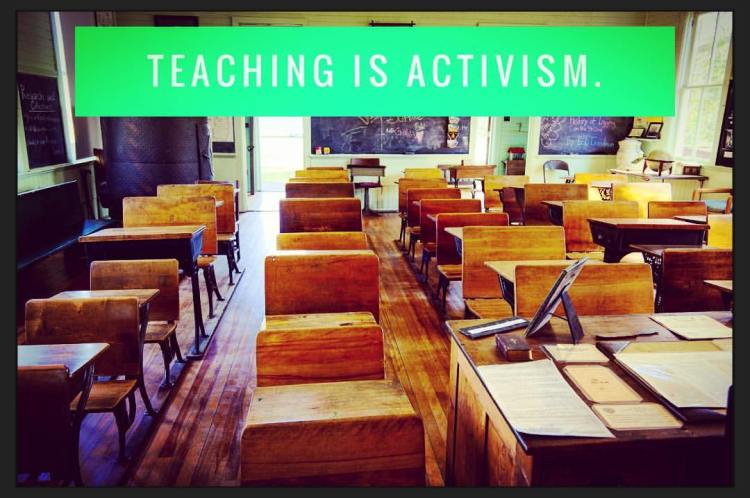
Ultimately, I see the classroom as a place for activism. Activism can be something as big as participation in global demonstrations or as big as learning about a different way of living in the world from your own to better understand it. If students can understand being Black or Latiné or white is much more than skin color, they can take this understanding out into the world with them as they enter fields like business, education, government, the arts, changing the world through their words and actions. Being able to learn about other experiences in an environment where they feel safe, accepted, and accommodated makes it easier to take in the information and take it with them into the world.
 Courtney Bliss, ABD